
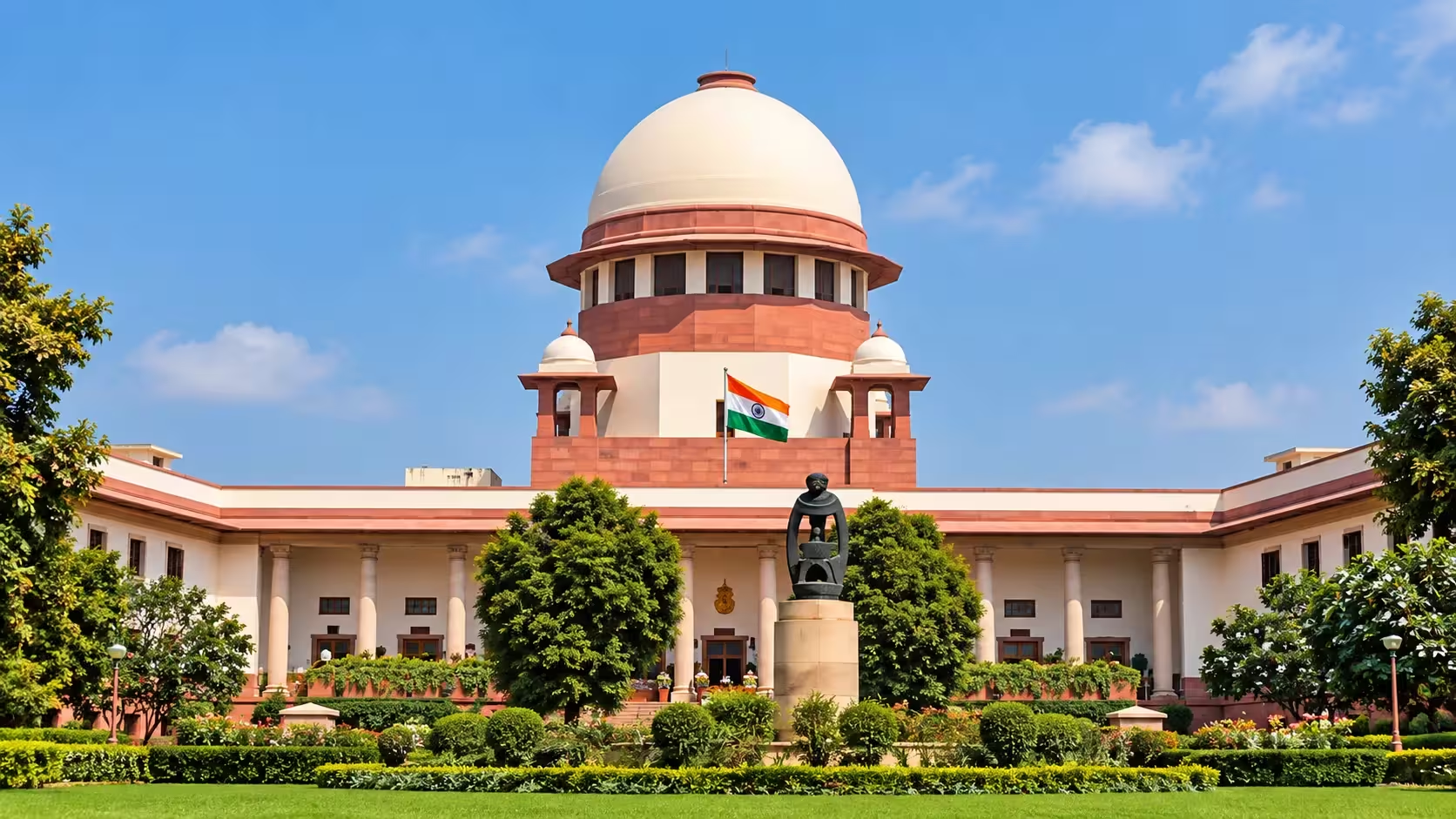
New Delhi: The Supreme Court of India has said that government officials must be very careful before using preventive detention laws. The Court said that these laws can take away a person’s freedom, so they must only be used when the law allows it.
The Court made this statement on Monday while hearing a case involving senior IPS officer A Arun. The officer had asked the Supreme Court to remove some negative comments made about him by the Madras High Court in an earlier judgment.
A three-judge bench, led by Justice Vikram Nath, along with Justice R Mahadevan and Justice AK Singh, heard the matter. The Supreme Court accepted the officer’s apology and ordered that the negative remarks made against him by the Madras High Court should be removed from the record.
What Is Preventive Detention?
Preventive detention means keeping a person in custody to stop a possible danger before it happens.
However, the government cannot use this power without a proper reason. The Supreme Court said that officials must check all facts and follow the law before taking such a step.
The Court also reminded public authorities that every person has a basic right to life and freedom. These rights must be respected while using government powers.
Why Did the Case Reach the Supreme Court?
The case started when senior IPS officer A Arun issued a detention order against a real estate developer named Santhosh Sharma.
The order was passed under the Tamil Nadu Goondas Act on September 22, 2025.
Santhosh Sharma was accused of being involved in property-related disputes, including problems over apartment sales and alleged false registrations.
However, the Madras High Court later cancelled the detention order. The High Court said that these matters were mainly disputes between individuals. They did not create a serious threat to public order or disturb normal life in society.
The High Court also made strong comments about officer Arun. It said that he had issued detention orders in other cases that were later cancelled by courts.
The High Court also questioned why old cases, some more than two years old, were used to support the detention order.
IPS Officer Offers an Apology
After the Madras High Court made these remarks, A Arun approached the Supreme Court.
He told the Court that he had understood his mistake and was ready to offer an unconditional apology.
His lawyer, senior advocate Siddharth Luthra, said that the negative remarks could affect the officer’s professional image and future career.
Arun also submitted an affidavit. In this document, he expressed regret for not apologising before the Madras High Court and for not accepting his mistake earlier.
The Supreme Court accepted his apology. The officer also promised that he would be more careful while performing his official duties in the future.
Supreme Court Removes the Remarks Against the Officer
After hearing the matter, the Supreme Court ordered that the negative remarks made against Arun in the Madras High Court’s May 2026 judgment should be removed from the official record.
However, the Supreme Court also gave an important message to senior police officers.
The Court said that officers in senior positions must understand the importance of their duties. They must also remember that their decisions can directly affect the freedom and rights of ordinary people.
What Did the Supreme Court Say?
The Supreme Court made it clear that preventive detention is a serious power and should never be used carelessly.
Officials must understand the facts, check the law and make responsible decisions before ordering someone’s detention.
The Court’s message is simple: Government officials have legal powers, but they must use them carefully and always respect the freedom and rights of every person.



Leave a Reply