
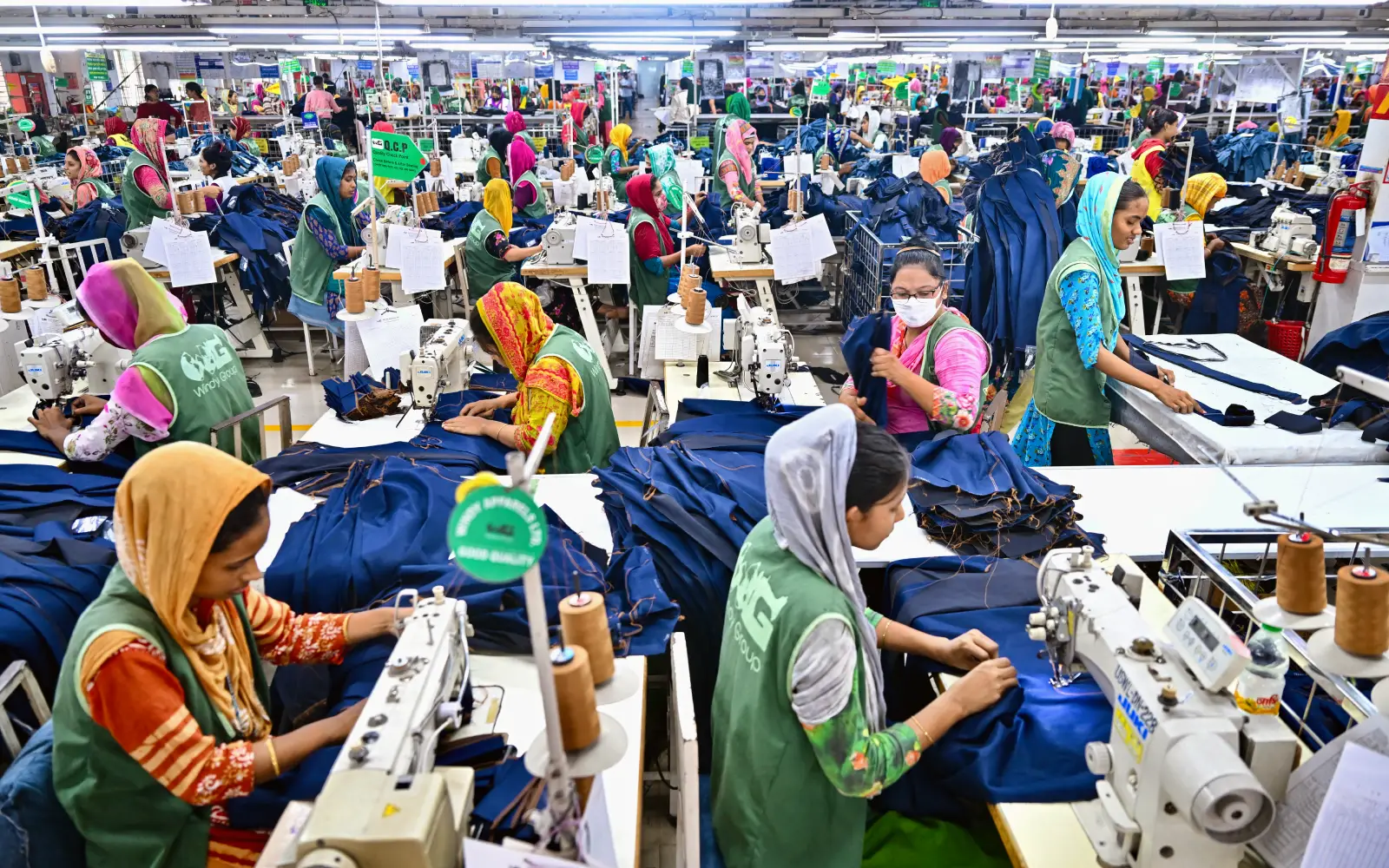
Dhaka: The Bangladesh government has formed a new wage board to review the salaries of garment workers after thousands of people protested for better pay. The protests have continued in industrial areas near the capital city, Dhaka.
Workers are demanding higher salaries because the cost of food, rent and other daily needs has increased. They say their current income is not enough to manage household expenses.
Despite the government’s decision to form the new board, thousands of workers continued their protests on Sunday. Some demonstrations also turned violent, leading to clashes between workers and police. Police used tear gas and sound grenades to control the crowds.
Workers Demand Monthly Salary of 30,000 Taka
At present, many garment workers in Bangladesh earn around 13,000 taka (approximately $106) per month.
However, workers are now demanding a minimum monthly salary of more than 30,000 taka.
Kalpona Akhter of the Bangladesh Center for Workers Solidarity said that workers need better wages because prices of everyday items have increased.
Workers believe that their salaries should match the rising cost of living so they can support their families.
Government Forms New Wage Board
Bangladesh’s Labour Minister Ariful Haque Choudhury announced the formation of the new wage board on Sunday.
The board will include representatives from the government, workers and factory owners. Its main job will be to review workers’ salaries and consider their demands.
The minister said that the government had been discussing the issue with labour leaders and factory owners for the last three days.
He also appealed to workers to return to their factories.
Why Is the Garment Industry Important for Bangladesh?
The garment industry is one of the biggest sources of income for Bangladesh.
Thousands of factories across the country make clothes such as T-shirts, jeans and sweaters. These products are sold to major brands and retailers in Europe and the United States.
The industry provides jobs to millions of people, especially workers who depend on factory salaries to support their families.
It also brings a large amount of foreign money into the country through exports.
Protests Could Affect Factory Operations
The ongoing protests have created problems in important industrial areas around Dhaka.
If the situation continues, factory work and clothing production could be affected. This may also create difficulties for companies that send clothes to international markets.
Bangladesh is also trying to expand its clothing business in new countries. The country has recently gained better access to the Japanese market and is looking for more export opportunities.
However, it faces competition from countries such as Vietnam.
The coming days will be important as workers wait for the new wage board to review their demands and the government looks for a solution to end the protests.





Leave a Reply